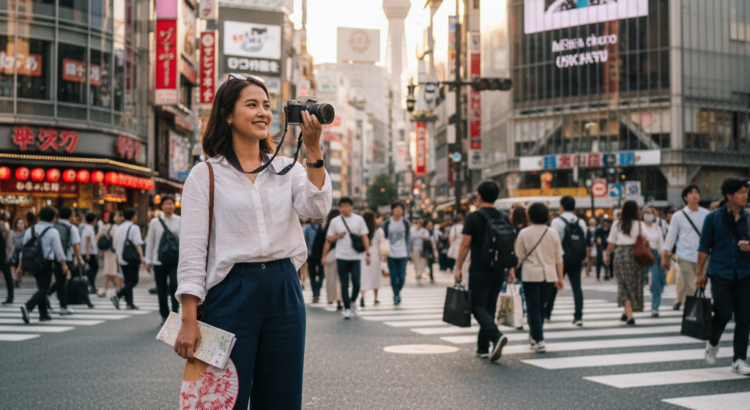
Planning your first holiday to Japan can be both exciting and overwhelming. This beautiful island nation offers a unique blend of ancient traditions and cutting-edge technology, making it one of the most fascinating destinations in the world. Whether you’re looking to buy online flight tickets to Tokyo, searching for a cheap flight ticket deal, or considering a comprehensive flight and hotel package, proper preparation is key to making your Japanese adventure unforgettable. Japan’s efficient transportation system, delicious cuisine, and warm hospitality await first-time visitors who take the time to understand the cultural nuances and practical considerations of traveling in this remarkable country.
Best Time to Visit Japan and Finding Cheap Flight Tickets
Timing your holiday to Japan correctly can significantly impact both your experience and your budget. The country experiences four distinct seasons, each offering unique attractions. Spring (March to May) is famous for cherry blossom season, particularly spectacular in late March and early April. However, this is also peak tourist season, meaning you’ll need to book your flight and hotel package well in advance to secure reasonable rates.
Summer (June to August) brings hot and humid weather, with a rainy season in June and early July. Despite the heat, this period can offer opportunities to find cheap flight tickets, especially if you avoid the Obon holiday week in mid-August. Autumn (September to November) rivals spring in popularity, with stunning fall foliage attracting visitors worldwide. The comfortable temperatures and clear skies make this an ideal time for sightseeing, though prices reflect the season’s popularity.
Winter (December to February) is often the best time to buy online flight tickets at lower prices, except during the New Year holiday period. This season is perfect for skiing enthusiasts and those who want to experience Japan’s winter festivals. To secure the best deals, consider booking your flights at least two to three months in advance, and be flexible with your travel dates. Tuesday and Wednesday departures often offer cheaper rates than weekend flights.
Understanding Japan’s Transportation System
Japan boasts one of the most efficient and punctual transportation networks in the world. The famous Shinkansen (bullet train) connects major cities at incredible speeds, making it possible to travel from Tokyo to Osaka in just 2.5 hours. For first-time visitors planning to explore multiple cities, purchasing a Japan Rail Pass before arriving in the country can result in significant savings. This pass must be bought outside Japan and offers unlimited travel on most JR trains, including many Shinkansen lines.
In major cities like Tokyo, Osaka, and Kyoto, the subway and train systems are extensive and incredibly reliable. While the networks may seem complex at first, station signs are clearly marked in English, and smartphone apps like Google Maps and Hyperdia provide accurate route planning and real-time updates. Consider purchasing an IC card (such as Suica or Pasmo) upon arrival at the airport. These rechargeable cards work on trains, subways, buses, and even in convenience stores and vending machines throughout the country.
Taxis are readily available but expensive compared to public transportation. They’re best reserved for short distances or when traveling with heavy luggage. Most taxi drivers don’t speak English, so having your destination written in Japanese or showing it on your phone is helpful. The doors open and close automatically, so don’t try to open them yourself.
Accommodation Options and Flight and Hotel Packages
Choosing the right accommodation sets the foundation for a successful holiday in Japan. First-time visitors should consider booking a flight and hotel package, which often provides better value and simplifies the planning process. Hotels in Japan range from international chains to unique Japanese-style ryokans (traditional inns). Business hotels offer compact but clean and functional rooms at moderate prices, making them popular among budget-conscious travelers.
Ryokans provide an authentic Japanese experience, featuring tatami mat floors, futon bedding, and often include kaiseki (traditional multi-course) meals. While typically more expensive than standard hotels, staying at least one night in a ryokan offers cultural immersion that’s well worth the investment. Many ryokans also feature onsen (hot spring baths), which are deeply ingrained in Japanese culture.
For budget travelers, capsule hotels offer a uniquely Japanese, space-efficient sleeping arrangement at very affordable rates. Though the sleeping pods are small, they’re surprisingly comfortable and include amenities like TVs and charging ports. Hostels and guesthouses have become increasingly popular and provide opportunities to meet fellow travelers while keeping costs down. When booking accommodation through a flight and hotel package, pay attention to the location relative to train stations, as this will greatly affect your convenience and transportation costs.
Essential Cultural Etiquette and Customs
Understanding Japanese etiquette will significantly enhance your holiday experience and help you navigate social situations with confidence. Bowing is the traditional greeting, though a simple nod is acceptable for foreigners. When entering homes, temples, and some traditional restaurants, you’ll need to remove your shoes. Look for a genkan (entryway) or shoe racks as indicators, and never wear outdoor shoes on tatami mats.
In public spaces, Japanese culture emphasizes harmony and respect for others. Speaking loudly on trains or in public places is considered rude. Phone calls should be avoided on public transportation, and phones should be kept on silent mode. When using escalators, stand on the left side in Tokyo (right side in Osaka) to allow others to pass on the opposite side.
Dining etiquette includes several important points. Say “itadakimasu” before eating and “gochisousama deshita” after finishing your meal to show appreciation. Don’t stick chopsticks upright in rice, as this resembles a funeral ritual. Slurping noodles is not only acceptable but indicates you’re enjoying your meal. Tipping is not practiced in Japan and can even be considered offensive, as excellent service is simply expected as standard.
Gift-giving is an important aspect of Japanese culture. If you’re invited to someone’s home, bring a small gift, preferably beautifully wrapped. Cash gifts should be placed in special envelopes available at convenience stores. When receiving business cards, accept them with both hands and take a moment to read them carefully before putting them away respectfully.
Money Matters and Budgeting Your Holiday
Japan operates primarily as a cash society, despite being technologically advanced. While credit cards are increasingly accepted in major cities and tourist areas, many smaller restaurants, shops, and rural locations still only accept cash. After you buy online flight tickets and arrange your accommodation, ensure you have a solid plan for accessing money during your trip.
Japanese ATMs can be surprisingly restrictive for foreign cards. Your best options are ATMs at 7-Eleven convenience stores, Japan Post offices, and some larger banks like MUFG and SMBC. These typically accept international cards 24/7. Consider withdrawing larger amounts less frequently to minimize transaction fees, but keep your cash secure as Japan has relatively low crime rates but pickpocketing can occur in crowded areas.
Daily budget expectations vary based on travel style. Budget travelers can manage on ¥5,000-8,000 per day (excluding accommodation) by eating at convenience stores and casual restaurants, using public transportation, and choosing free or low-cost attractions. Mid-range travelers should budget ¥10,000-20,000 daily for comfortable meals, entrance fees, and occasional taxi rides. Luxury travelers can easily spend ¥30,000 or more daily on high-end dining, private transportation, and premium experiences.
Japan offers a tax-free shopping program for tourists. When making purchases over ¥5,000 at participating stores, present your passport to receive a tax refund (usually 8-10%). The items must be taken out of Japan, and the store will typically seal them in a special bag that shouldn’t be opened until you leave the country. This can result in significant savings on electronics, clothing, and souvenirs.
Language Barriers and Communication Tips
While English proficiency in Japan varies, especially outside major tourist areas, don’t let language concerns deter you from planning your holiday. Many Japanese people study English in school but may be hesitant to speak it due to lack of confidence. Younger people and those working in hotels and tourist attractions generally have better English skills.
Before your trip, download translation apps like Google Translate, which offers offline mode and camera translation features perfect for reading menus and signs. Learning basic Japanese phrases shows respect and is greatly appreciated. Essential phrases include “sumimasen” (excuse me), “arigato gozaimasu” (thank you very much), “onegaishimasu” (please), and “eigo ga hanasemasu ka?” (do you speak English?).
Restaurant challenges can be overcome by looking for establishments with picture menus or plastic food displays in windows—a common practice in Japan that makes ordering easy even without language skills. Pointing at what you want is perfectly acceptable. Many restaurants now also offer QR code menus with English translations, especially after the 2020 Tokyo Olympics preparations.
Consider purchasing a portable WiFi device or SIM card when you arrive at the airport. Reliable internet access allows you to use translation apps, navigation tools, and stay connected with your flight and hotel package confirmations. Major airports and many tourist areas offer free WiFi, but having your own connection provides peace of mind and continuous access to helpful resources.
Must-Visit Destinations for First-Time Visitors
Tokyo, Japan’s bustling capital, deserves at least three to four days of your holiday itinerary. Don’t miss the historic Senso-ji Temple in Asakusa, the bustling Shibuya Crossing, and the trendy shopping districts of Harajuku and Shinjuku. Take time to explore quieter neighborhoods like Yanaka for a glimpse of old Tokyo, and visit the Meiji Shrine for a peaceful retreat in the heart of the city. The Tokyo Skytree and Tokyo Tower offer spectacular views, while teamLab Borderless provides an immersive digital art experience unlike anything else in the world.
Kyoto, the cultural heart of Japan, showcases the country’s traditional side with over 2,000 temples and shrines. The iconic Fushimi Inari Shrine with its thousands of vermillion torii gates is a must-see, as is the stunning golden Kinkaku-ji (Golden Pavilion). The Arashiyama Bamboo Grove offers an otherworldly experience, and the Gion district provides opportunities to spot geishas and experience traditional tea houses. Allocate at least two to three days to properly explore Kyoto’s treasures.
Osaka, known as Japan’s kitchen, is perfect for food lovers. The Dotonbori district buzzes with energy, neon lights, and countless dining options serving local specialties like takoyaki and okonomiyaki. Osaka Castle offers historical significance and beautiful grounds, while Universal Studios Japan provides family-friendly entertainment. The city’s more relaxed atmosphere compared to Tokyo makes it an excellent base for exploring the Kansai region.
For first-time visitors with limited time, consider the classic “Golden Route” connecting Tokyo, Hakone (or Mount Fuji area), Kyoto, and Osaka. This itinerary covers Japan’s most iconic experiences and can be comfortably completed in 7-10 days. When you buy online flight tickets, check if flying into one city and out of another (open-jaw ticket) might be more efficient than a round-trip ticket to the same destination.
Food and Dining Experiences
Japanese cuisine extends far beyond sushi and ramen, offering an incredible diversity of flavors and dining experiences. Start your day with a traditional Japanese breakfast featuring grilled fish, miso soup, rice, and pickled vegetables. Convenience stores like 7-Eleven, Lawson, and FamilyMart offer surprisingly high-quality, affordable food options including onigiri (rice balls), bento boxes, and fresh sandwiches—perfect for budget-conscious travelers.
Ramen shops range from casual counter-service establishments to renowned restaurants with Michelin stars. Each region has its own style, from rich, pork-based tonkotsu ramen in Fukuoka to miso ramen in Hokkaido. Many ramen shops use ticket vending machines where you select and pay for your meal before sitting down—don’t be intimidated; pictures on the buttons help non-Japanese readers make selections.
Sushi etiquette is simpler than many tourists expect. At conveyor belt sushi restaurants (kaiten-zushi), simply grab plates as they pass by. Prices are indicated by plate colors. At traditional sushi restaurants, you can order à la carte or choose omakase (chef’s choice). Mix a small amount of wasabi with soy sauce, and dip the fish side (not the rice) lightly into the sauce. Eating sushi with your hands is traditional and acceptable.
Don’t miss trying yakitori (grilled chicken skewers), tempura (battered and fried seafood and vegetables), okonomiyaki (savory pancakes), and kaiseki (traditional multi-course meals). Izakayas (Japanese pubs) offer a casual atmosphere for sampling various small dishes with drinks. Department store basement food floors (depachika) showcase an amazing array of prepared foods, desserts, and ingredients—perfect for sampling multiple items or picking up gifts.
Practical Tips for a Smooth Holiday Experience
Packing appropriately for your Japanese holiday depends on the season, but certain items are universally useful. Comfortable walking shoes are essential, as you’ll likely walk 15,000-20,000 steps daily while sightseeing. Bring slip-on shoes since you’ll frequently remove them when entering temples, homes, and some restaurants. Modest clothing is appreciated, especially when visiting religious sites, though Japan is generally less conservative than some Asian countries.
Power outlets in Japan use Type A plugs (the same as in the United States) with 100V electricity. If you’re traveling from countries with different plug types, bring a universal adapter. Most modern electronics like phone chargers and laptops can handle the voltage difference, but check your devices to be sure.
Japan is incredibly safe, with low crime rates even in major cities. However, basic precautions still apply. Keep valuables secure, and be mindful of your belongings in crowded areas. Natural disasters, particularly earthquakes, are a reality in Japan. Familiarize yourself with basic earthquake safety procedures, and download the Japan Safe Travel app, which provides emergency information and alerts in multiple languages.
Luggage forwarding services (takkyubin) are popular in Japan and incredibly convenient. For a reasonable fee, you can send your large luggage ahead to your next hotel, allowing you to travel light on trains. This service is available at hotels, convenience stores, and airports. Consider using this option, especially when changing cities, as navigating stairs and crowded trains with large suitcases can be challenging.
Medical facilities in Japan are excellent, but healthcare costs can be high without insurance. Ensure you have comprehensive travel insurance before your trip. Pharmacies carry many common medications, though pain relievers tend to be less potent than Western versions. If you require specific medications, bring adequate supplies and keep them in their original packaging with prescriptions.
Booking Your Trip: Flight and Hotel Package Considerations
When planning to buy online flight tickets to Japan, flexibility with dates can yield significant savings. Use flight comparison websites and set up price alerts to monitor fare changes. Direct flights are more convenient but typically more expensive than connections. If you’re combining your holiday with visits to other Asian countries, consider multi-city tickets that might offer better value than separate bookings.
Many travel agencies and online booking platforms offer attractive flight and hotel package deals for Japan. These packages can provide substantial savings compared to booking components separately, especially during off-peak seasons. When evaluating packages, carefully review what’s included—some offer airport transfers, breakfast, or even JR Pass options. Read the cancellation policies carefully, as flexibility has become increasingly important in travel planning.
Consider which airports you’ll use when booking. Tokyo has two major international airports: Narita and Haneda. Haneda is closer to central Tokyo (30 minutes) but typically has fewer international flights. Narita is further out (60-90 minutes) but often offers more flight options and sometimes cheaper flight tickets. Osaka’s Kansai International Airport serves the western region well. If your itinerary covers both areas, an open-jaw ticket flying into one region and out of another eliminates backtracking.
When comparing flight and hotel packages, location matters tremendously. A hotel near a major train station in cities like Tokyo or Osaka provides far more value than a slightly cheaper option in an inconvenient location. Calculate potential transportation costs and time when making accommodation decisions. Many package deals also include breakfast, which can represent significant daily savings and convenience.
Conclusion
Planning your first holiday to Japan requires thoughtful preparation, but the rewards are immeasurable. From the moment you buy online flight tickets to your arrival and exploration of this fascinating country, each aspect of your journey offers opportunities for memorable experiences. By understanding cultural etiquette, navigating the excellent transportation system, and taking advantage of flight and hotel package deals, you can maximize both your budget and your enjoyment. Japan welcomes millions of first-time visitors annually, and with proper planning, your trip can be smooth, enriching, and inspiring. Whether you’re drawn to ancient temples, cutting-edge technology, natural beauty, or world-class cuisine, Japan delivers on every front. The key to a successful first visit lies in balancing must-see attractions with flexibility to discover unexpected treasures, maintaining an open mind toward cultural differences, and embracing the unique blend of tradition and innovation that makes Japan unlike anywhere else on Earth. Start researching those cheap flight tickets, consider comprehensive packages that simplify logistics, and prepare for an adventure that will likely leave you already planning your return visit before you’ve even departed.