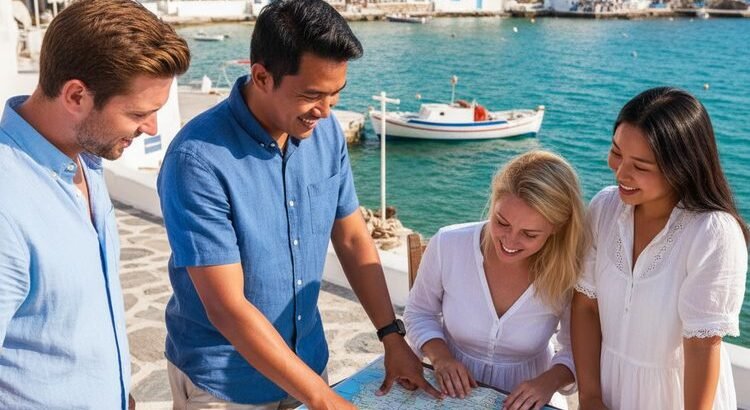
Dreaming of azure waters, whitewashed villages, and ancient history? Imagine yourself basking in the Mediterranean sun, exploring hidden coves, and indulging in delectable Greek cuisine. Greece, with its thousands of islands, offers an unparalleled travel experience, and there’s no better way to discover its magic than through island hopping. But with so many stunning destinations to choose from, planning your perfect holiday can feel overwhelming. Where do you start? What’s the best way to travel between islands? How can you find the best deals on flights and accommodation? This comprehensive guide will equip you with all the knowledge you need to transform your Greek island-hopping fantasy into a seamless reality. We’ll cover everything from choosing your ideal itinerary and booking your transport to finding affordable buy online flight ticket options and securing the perfect cheap flight ticket, ensuring your adventure is as smooth as the Aegean Sea.
Choosing Your Greek Island Hopping Itinerary: Crafting Your Perfect Holiday
The first step to an unforgettable Greek island-hopping adventure is crafting an itinerary that aligns with your interests and travel style. Greece boasts over 200 inhabited islands, each with its own unique charm and character. For a classic first-timer’s experience, the Cyclades are often recommended. Islands like Santorini, with its iconic sunsets and caldera views, Mykonos, famous for its vibrant nightlife and cosmopolitan atmosphere, and Paros, offering a blend of beautiful beaches and charming towns, are easily accessible and well-connected. If you’re seeking a more laid-back, authentic Greek experience, consider the Dodecanese islands, such as Rhodes with its rich history, or Patmos, known for its spiritual significance. For nature lovers and hikers, the rugged beauty of the Ionian islands like Corfu and Zakynthos, with their lush greenery and stunning coastlines, are ideal. Families might prefer Crete, the largest island, offering a diverse array of activities from ancient ruins to water parks, or Naxos, with its family-friendly beaches and traditional villages. When planning your route, consider the travel time between islands; while some are just an hour or two apart by ferry, others may require an overnight journey or even a short flight. Don’t try to cram too many islands into one trip – a good rule of thumb is to allow at least 3-4 days per island to truly soak in its atmosphere and explore its offerings. For instance, a popular 10-day itinerary might involve flying into Athens, spending a day or two exploring the capital, then taking a fast ferry to Mykonos for three days, followed by another ferry to Paros for three days, and concluding with a ferry to Santorini for three days before flying back to Athens or directly home. This allows for a balance of relaxation and exploration without feeling rushed. Researching ferry schedules in advance and considering the time of year is crucial; high season (June-August) offers the most frequent connections but also higher prices and larger crowds.
Navigating Transportation: Finding Your Cheap Flight Ticket and Ferry Connections
Seamless transportation is key to a stress-free island-hopping experience. Your journey will likely begin by finding the best cheap flight ticket to a major Greek hub like Athens (ATH) or Thessaloniki (SKG). For international travelers, Athens is typically the most cost-effective and well-connected entry point. Websites like Skyscanner, Google Flights, and Kayak are excellent resources for comparing prices and setting up price alerts. Consider flying into one international airport and departing from another if your itinerary allows for it, as this can sometimes save time and money, such as flying into Athens and out of Santorini (JTR) if your trip concludes there. Once in Greece, the primary mode of inter-island transport is by ferry. Greece boasts an extensive and efficient ferry network connecting virtually all inhabited islands. Companies like Blue Star Ferries, Hellenic Seaways, SeaJets, and Minoan Lines operate various types of vessels, from slow conventional ferries to high-speed catamarans. Conventional ferries are often more affordable and offer a more scenic journey, allowing you to enjoy the open sea and island views, but they take longer. High-speed ferries are pricier but significantly cut down travel times, which can be invaluable when trying to maximize your time on an island. You can buy online flight ticket and ferry tickets in advance, especially during peak season, through official company websites or aggregators like Ferryhopper and Let’s Ferry. Booking in advance is highly recommended to guarantee your spot, particularly if you’re traveling with a vehicle. For longer distances or when time is of the essence, domestic flights are an option. Aegean Airlines and Olympic Air are the main domestic carriers, connecting Athens and Thessaloniki to many islands, including Mykonos, Santorini, Crete, Rhodes, and Corfu. While usually more expensive than ferries, a short domestic flight can save you hours of travel time, turning a 6-hour ferry ride into a 45-minute flight. Combining ferries and domestic flights strategically can optimize your travel, for instance, flying into Santorini and then taking ferries to nearby islands. Once on an island, local buses, taxis, and rental cars (or ATVs/scooters) are your primary means of getting around. Public buses are generally very affordable and reliable, especially in popular tourist areas. Rental cars offer flexibility but can be expensive, and parking can be a challenge in busy towns. Always compare prices for flight and hotel package deals that might combine flights and accommodation, as these can sometimes offer significant savings over booking separately.
Accommodations and Budgeting: Securing Your Dream Flight and Hotel Package
Finding the right accommodation and managing your budget are critical components of any successful island-hopping trip. Greece offers a vast spectrum of lodging options, from luxurious five-star resorts to charming guesthouses, budget-friendly hostels, and self-catering apartments. When planning your island adventure, considering a flight and hotel package can often simplify the booking process and sometimes yield significant savings. Many reputable travel agencies and online platforms offer curated packages that bundle your international or domestic flights with accommodations, which can be particularly convenient for those who prefer an all-in-one booking solution. Websites like Expedia, Booking.com, and Kayak frequently feature these types of deals. However, it’s also worth comparing the cost of a package against booking flights and hotels separately, especially if you have specific preferences or wish to stay in unique boutique hotels that might not be part of standard packages.
Budgeting for your Greek island holiday varies significantly based on your travel style. High-end islands like Mykonos and Santorini generally command higher prices for accommodation, dining, and activities, especially during peak season (July and August). During this period, a mid-range hotel on Santorini could easily cost upwards of €200-300 per night. Conversely, islands such as Naxos, Paros, or even parts of Crete offer more affordable options, where you might find comfortable guesthouses for €60-100 per night.
To save on accommodation, consider traveling during the shoulder seasons (April-May or September-October), when prices are lower, and the weather is still delightful. Booking well in advance, particularly for popular islands and specific properties, can also secure better rates. Look for properties slightly outside the main town centers; they often offer better value and a more authentic experience, typically with easy access to public transport or a short walk to attractions. Hostels are an excellent option for solo travelers or those on a very tight budget, with dorm beds starting from €20-40 per night in many locations.
Beyond accommodation, factor in daily expenses. Food costs can range from €20-30 per person per day for budget-conscious travelers sticking to gyros, souvlaki, and local tavernas, to €50-100+ for those who enjoy dining at more upscale restaurants. Transportation between islands via ferries can add up, with high-speed ferry tickets ranging from €30-80 per leg depending on distance and class. Local transport on islands (buses, taxis, rentals) should also be accounted for. Don’t forget to allocate funds for activities like boat tours, museum entrance fees, and souvenirs. A realistic daily budget for a mid-range traveler, excluding international flights, might be around €100-150 per person, while budget travelers could manage on €60-80, and luxury travelers should plan for €200+. Always have a buffer for unexpected expenses and enjoy the flexibility that planning ahead provides.

Packing Essentials: What to Bring for Your Holiday
Packing smart is crucial for an enjoyable Greek island-hopping holiday, especially given the likelihood of moving between islands frequently. Unlike a static resort vacation, island hopping usually involves carrying your luggage on and off ferries, up cobbled streets, and into various accommodations. Therefore, packing light is paramount. A good-quality backpack (40-60 liters) or a lightweight, wheeled duffel bag is often preferred over a large, rigid suitcase.
Start with clothing. Given the Mediterranean climate, lightweight, breathable fabrics like cotton and linen are ideal. Pack a mix of comfortable shorts, skirts, dresses, and T-shirts for daytime exploration. Swimsuits (at least two, so one can dry while you wear the other) are an absolute must. For evenings, especially in slightly fancier establishments or during cooler shoulder seasons, a light sweater or jacket and a pair of smarter trousers or a dress would be appropriate. Don’t forget a wide-brimmed hat, sunglasses, and a sarong or cover-up for beach days and modest village visits.
Footwear is another critical consideration. Comfortable sandals or walking shoes are essential for exploring ancient sites, charming villages, and rugged trails. A pair of flip-flops for the beach or hotel room is also advisable. If your itinerary includes hiking or exploring uneven terrain, sturdy closed-toe shoes are recommended.
Beyond clothing, sun protection is non-negotiable. High SPF sunscreen, after-sun lotion, and lip balm with SPF will protect you from the intense Greek sun. A reusable water bottle is not only environmentally friendly but also practical for staying hydrated throughout the day; many towns have public fountains, and hotels can refill them.
For personal electronics, bring your phone, charger, a portable power bank (invaluable for long days out or ferry rides), and a universal travel adapter (Greece uses Type C/F plugs, 230V). Consider a waterproof pouch for your phone to protect it from sand and splashes, especially during boat trips.
A small first-aid kit with essentials like pain relievers, band-aids, antiseptic wipes, allergy medication, and any personal prescriptions will provide peace of mind. A beach towel (or a quick-drying travel towel) will come in handy for spontaneous dips in the sea. Finally, don’t forget your vital documents: passport, visa if required, travel insurance information, credit cards, some local currency (Euros), and printed copies or digital backups of all your bookings (flights, ferries, hotels) including your cheap flight ticket and any flight and hotel package details. A small daypack is also useful for carrying daily essentials like water, snacks, camera, and guidebook during your excursions.
Local Etiquette and Safety Tips: Enhancing Your Holiday Experience
Understanding and respecting local customs, combined with practicing smart safety measures, will significantly enhance your Greek island-hopping holiday. Greeks are generally warm, hospitable, and proud of their culture, and making an effort to engage respectfully will be appreciated.
Basic Greek phrases like “Kalimera” (good morning), “Kalispera” (good evening), “Efharisto” (thank you), and “Parakalo” (please/you’re welcome) can go a long way. When visiting churches or monasteries, dress modestly, covering shoulders and knees; locals often provide wraps or skirts at entrances if you arrive unprepared. It’s polite to greet shopkeepers and waiters. Punctuality is often more relaxed in Greece, particularly on the islands, so adapt to “Greek time” and enjoy the slower pace of life. Tipping is customary but not obligatory; rounding up the bill or leaving 5-10% in restaurants for good service is generally appreciated.
Safety on the Greek islands is generally high, with violent crime being rare. However, like any popular tourist destination, petty crime such as pickpocketing can occur, especially in crowded areas, ferry ports, and popular tourist sites. Be vigilant and take precautions: keep your valuables secure, preferably in a money belt or a secure cross-body bag. Avoid leaving bags unattended at the beach or in cafes.
When renting vehicles like ATVs or scooters, exercise extreme caution. Roads on some islands can be narrow, winding, and poorly maintained, and local driving habits can be assertive. Always wear a helmet, ensure you have appropriate insurance, and only rent from reputable companies. If you’ve enjoyed a few glasses of local wine, use taxis or public transport.
Sun safety cannot be stressed enough. The Mediterranean sun is powerful, especially during midday. Drink plenty of water to stay hydrated, seek shade during peak hours (12 PM – 4 PM), and generously apply high SPF sunscreen, even on cloudy days or when swimming. Heatstroke and severe sunburn can quickly ruin a vacation.
Be mindful of your alcohol consumption, particularly if you are unfamiliar with local drinks like ouzo or raki. Always know your limits. When swimming, be aware of strong currents on certain beaches and always follow local warnings or lifeguard instructions. If you’re undertaking water sports, ensure the operators are certified and that safety equipment is provided and properly checked.
Finally, always have access to emergency numbers. The general European emergency number is 112. Keeping a digital copy of your passport and other important documents on your phone or in the cloud can be a lifesaver in case of loss or theft. By being respectful and taking sensible precautions, you can ensure your Greek island-hopping adventure remains joyful and safe from start to finish. Always prioritize your well-being and common sense to fully immerse yourself in the beauty and hospitality of Greece.
Booking Strategies: How to Buy Online Flight Ticket and Master the Flight and Hotel Package
Mastering the art of booking your Greek island-hopping trip involves strategic planning, especially when it comes to securing your buy online flight ticket and potentially a full flight and hotel package. The timing of your booking can significantly impact costs and availability.
For international flights, it’s generally best to book 3-6 months in advance, particularly if you’re traveling during the peak summer season (June-August). For shoulder seasons (April-May, September-October), 2-4 months in advance might suffice to get a good cheap flight ticket. Use flight comparison websites like Google Flights, Skyscanner, and Kiwi.com. These platforms allow you to compare prices across multiple airlines, set up price alerts, and even explore flexible date options to find the cheapest days to fly. Consider flying on weekdays, as flights are often more expensive on weekends. Also, explore “open-jaw” flights, where you fly into one city (e.g., Athens) and out of another (e.g., Santorini), as this can save you backtracking and internal travel costs.
When it comes to booking a flight and hotel package, this option can offer convenience and sometimes better value, especially if you’re looking for a hassle-free booking process. Major Online Travel Agencies (OTAs) such as Expedia, Booking.com, and Lastminute.com frequently offer bundled deals that can be cheaper than booking flights and accommodation separately. However, always do a direct comparison: price out the flight and hotel individually on the airline’s and hotel’s own websites, then compare that total to the package price. Sometimes, booking separately allows you more flexibility in choosing unique accommodations or specific flight times that might not be available in a package.
Ferry tickets should also be booked in advance, especially for popular routes and during peak season. Websites like Ferryhopper and Let’s Ferry are excellent resources for comparing schedules and prices across different ferry companies. For high-speed ferries, booking 1-2 months out is advisable. For conventional ferries, you might get away with booking a few weeks in advance, but for peace of mind, earlier is always better. If you plan to rent a car and take it on the ferry, booking several months ahead is crucial as car spots are limited.
Accommodation bookings should mirror your flight booking timeline. The most desirable hotels, boutique guesthouses, and apartments on popular islands fill up quickly. Therefore, booking 3-6 months in advance is highly recommended to secure your preferred stay at a reasonable price, particularly if you’re traveling as part of a group or family. Look for properties with flexible cancellation policies, especially if your plans are not entirely firm. Using booking platforms like Booking.com, Hotels.com, and even Airbnb (for apartment rentals) offers wide selections and user reviews.
Finally, consider travel insurance as soon as you book your first component of the trip. This protects your investment against unforeseen circumstances like flight cancellations, lost luggage, medical emergencies, or changes in your travel plans, safeguarding your perfect Grecian holiday.
Kesimpulan
Embarking on a Greek island-hopping adventure is an experience that promises a tapestry of breathtaking landscapes, rich history, and unforgettable cultural encounters. This complete guide has provided you with the essential tools and insights to plan and execute your dream holiday, from strategically choosing your islands and navigating an efficient itinerary to securing the best cheap flight ticket and perfecting your flight and hotel package bookings. We’ve delved into the practicalities of inter-island transport, the art of smart packing, and important local etiquette and safety tips, ensuring every aspect of your journey is covered. By leveraging advance booking strategies and embracing the spirit of discovery, you can effortlessly manage your budget and itinerary, transforming what might seem like a daunting task into an exciting planning phase. The shimmering Aegean Sea, the ancient ruins, and the warm hospitality of the Greek people await. Don’t let the planning stop you – use these insights to confidently buy online flight ticket, book your ferries, and get ready for an indelible journey. Your ultimate Greek island escape is not just a dream, it’s a meticulously planned reality waiting to unfold.