Tucked away in northern Thailand, the city of Sukhothai is home to one of the nation’s most celebrated heritage sites — the Sukhothai Historical Park. This UNESCO World Heritage Site serves as a living testimony to the grandeur of the Sukhothai Kingdom, which flourished during the 13th and 14th centuries. With its enchanting ruins, intricate art, and serene natural backdrop, the park is not only a window into Thailand’s early history but also a destination that blends spirituality, culture, and scenic beauty.
In this article, we will uncover the fascinating story of Sukhothai, explore its most significant landmarks, and provide essential travel tips for those eager to experience this ancient treasure.
The Historical Background of Sukhothai
The Birth of a Kingdom
The Sukhothai Kingdom is often regarded as the cradle of Thai civilization. Emerging in the 13th century, it marked the beginning of Thai cultural and political identity. The rulers of Sukhothai introduced innovations in art, religion, and governance that shaped the foundation of modern Thailand.
At its height, the kingdom stretched across much of present-day Thailand and became a hub of Theravada Buddhism, influencing neighboring regions through religion and trade.
The Layout of the Historical Park
Today, the Sukhothai Historical Park spreads across more than 70 square kilometers and includes hundreds of structures that reflect the artistry and devotion of its people. Divided into several zones, the park encompasses temples, monasteries, stupas, and ponds, many of which remain remarkably well-preserved. Visitors are immediately transported to a world where sacred architecture and royal legacies intertwine.
Must-See Attractions in Sukhothai Historical Park
Wat Mahathat – The Spiritual Heart
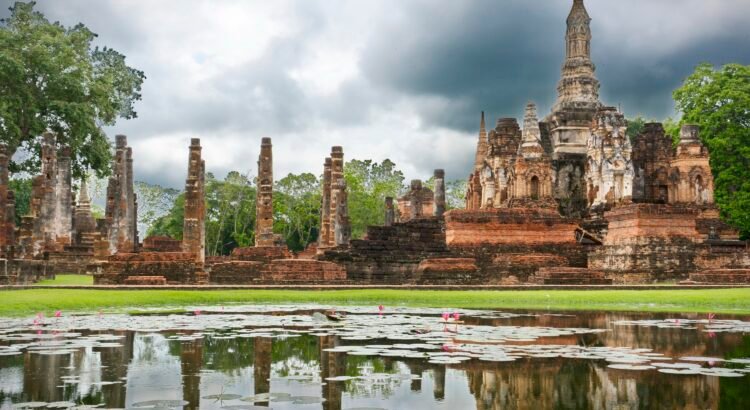
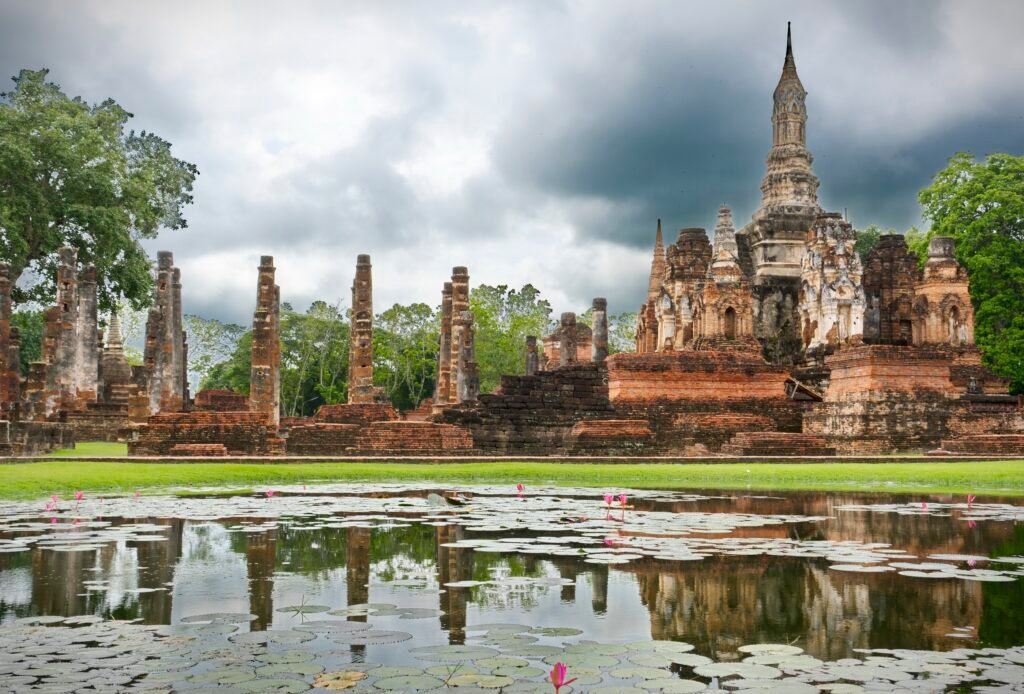
Among the most iconic landmarks in the park is Wat Mahathat, the principal temple of the Sukhothai Kingdom. Dominated by a grand stupa designed in the classic lotus-bud style, the temple represents the spiritual core of ancient Sukhothai. Surrounding the central stupa are elegant chedis and statues of the Buddha, each embodying the serene beauty of Sukhothai’s artistic style.
For centuries, Wat Mahathat served as a sacred site where monarchs and devotees alike performed religious rituals. Its timeless beauty continues to inspire awe and reverence among modern-day visitors.
Wat Si Chum – Home of the Giant Buddha
Another unmissable site is Wat Si Chum, renowned for its colossal seated Buddha, known as Phra Achana. Standing at an impressive 15 meters tall, the statue is housed within an open-roof mandapa that magnifies its spiritual aura. The Buddha’s calm expression and graceful hand gestures symbolize peace and compassion, offering a deeply moving experience for those who stand before it.
Legends and inscriptions suggest that Wat Si Chum played a significant role in the spread of Buddhism during the Sukhothai period, making it a site of both historical and religious importance.
Wat Sri Sawai – A Blend of Cultures
Situated near the center of the park, Wat Sri Sawai reveals another dimension of Sukhothai’s past. With its three Khmer-style prangs, the temple hints at the cultural exchanges between Sukhothai and neighboring civilizations. Originally believed to be a Hindu shrine before being adapted for Buddhist worship, Wat Sri Sawai demonstrates the region’s dynamic spiritual evolution.
Experiencing the Natural Beauty
Beyond the ruins, Sukhothai Historical Park is surrounded by lush greenery, lotus ponds, and tranquil landscapes. The harmony between nature and architecture creates a serene atmosphere, perfect for meditation or leisurely exploration.
Visitors often rent bicycles to ride along shaded paths, making it easy to explore the vast grounds at a relaxed pace. The reflections of temples on calm waters during sunrise or sunset further enhance the park’s magical ambiance.
Visitor Information
Getting There
Reaching Sukhothai Historical Park is relatively convenient. Travelers can fly to Sukhothai Airport, located about 40 kilometers from the park. From the airport, taxis, buses, or private transfers are available to reach the city and the historical site. The park itself lies around 12 kilometers from modern Sukhothai town, accessible by tuk-tuk, rented motorbike, or bicycle.
Ticket Prices
The entrance fee is modest and affordable, making it accessible to a wide range of travelers. For foreign visitors, the cost is approximately 100 baht, while Thai nationals pay around 40 baht. Keep in mind that fees are subject to change, so it is advisable to check the latest rates before planning your visit.
Tips for a Smooth Visit
- Best Time to Visit: Early morning or late afternoon, when the heat is less intense and the light creates dramatic shadows over the ruins.
- Dress Appropriately: As the park contains sacred temples, modest clothing is recommended out of respect for cultural traditions.
- Stay Hydrated: Carry drinking water and wear sunscreen, as walking or cycling under the Thai sun can be exhausting.
- Footwear: Comfortable shoes are essential, as much of the exploration involves walking on uneven paths.
Why Sukhothai Historical Park is a Must-Visit
Sukhothai Historical Park is more than just a collection of ruins; it is a living narrative of Thailand’s origins. The artistry of its temples, the grandeur of its monuments, and the serenity of its landscapes all combine to offer a profound cultural journey. Unlike more crowded tourist sites, Sukhothai maintains an atmosphere of tranquility, allowing visitors to truly immerse themselves in its history and spirituality.
For history enthusiasts, architecture lovers, and spiritual seekers, the park is an unmissable destination that captures the essence of ancient Thailand.
Conclusion
Sukhothai Historical Park is a jewel of Thailand’s heritage — a place where the echoes of a once-glorious kingdom continue to resonate through timeless ruins and sacred spaces. From the towering Buddha of Wat Si Chum to the lotus-bud stupa of Wat Mahathat, every corner of the park tells a story of devotion, artistry, and cultural legacy.
Visiting this UNESCO World Heritage Site is not only a step back into Thailand’s golden age but also an opportunity to reflect on the enduring beauty of human creativity. For travelers seeking both historical depth and peaceful exploration, Sukhothai remains one of the most rewarding destinations in Southeast Asia.