For travelers seeking unique natural experiences, Mount Ijen, also known as Ijen Crater, is a must-visit destination in East Java, Indonesia. Located in Banyuwangi, this active volcano offers more than just trekking adventures; it is globally renowned for its rare natural phenomenon called Blue Fire. Over the years, East Java has become a prime tourist destination, attracting visitors from across Indonesia and abroad. While areas like Batu, Malang, Probolinggo, and Surabaya are already popular, Banyuwangi stands out for its rich natural attractions, with Mount Ijen being one of the highlights.
Understanding Mount Ijen
Mount Ijen is a prominent volcano in East Java, offering a mix of adventure and scenic beauty. The most famous feature of Ijen is its sulfur crater lake, a stunning blue-green volcanic lake with a diameter of approximately 54 hectares. The crater rim stands 238 meters above sea level, while the lake itself is situated at 2,148 meters above sea level, reaching a depth of around 200 meters. The lake contains approximately 36 million cubic meters of highly acidic, hot water, creating a unique and dramatic landscape.
Climate and Flora
Temperatures around Mount Ijen range from a minimum of 2°C to a maximum of 18°C, with cool mornings and cold nights. The surrounding terrain supports diverse vegetation, including mountain grasses, orchids, pine trees, jamuju, and the iconic edelweiss flower. The breathtaking scenery is enhanced by neighboring peaks such as Mount Raung, Mount Merapi, Mount Papah, and Mount Widodaren, making the entire area a paradise for nature enthusiasts and photographers.
Location, Routes, Ticket Prices, and Tips
The “Triangle Diamonds” of Banyuwangi
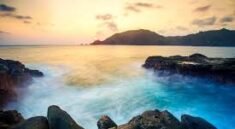
Banyuwangi is home to three key attractions: Mount Ijen, Plengkung Beach, and Sukamade Turtle Beach, collectively referred to as the “Triangle Diamonds.” The name comes from the fact that if you connect these locations with straight lines, they form a triangular shape, representing the region’s prime tourist destinations. Among these, Mount Ijen is the most sought-after for natural sightseeing and trekking adventures.
Location Details
Mount Ijen spans the border between Banyuwangi and Bondowoso regencies, within the Baluran National Park. This positioning sometimes causes the crater to be referred to as either Kawah Ijen Banyuwangi or Kawah Ijen Bondowoso. Both names are correct, depending on the perspective of the visitor.
Routes to Mount Ijen
From Banyuwangi
Travelers can start from Banyuwangi or Bondowoso and reach the Paltuding area in Licin Village, where ticket counters open at 1:00 AM. The trekking route from Paltuding usually begins early in the morning and lasts until noon. For those aiming to witness the Blue Fire phenomenon, it is recommended to start around 2:30 AM, as the hike to the crater takes roughly two hours.
From Surabaya or Malang
The journey from Surabaya or Malang covers approximately 225 kilometers, taking around six to seven hours by car or motorcycle. The road to Mount Ijen is accessible via two main routes: the western and eastern trails.
- Western Route: Surabaya → Bondowoso (191 km) → Sempol (165 km) → Banyupait (14 km) → Paltuding (4 km) → Crater (3 km on foot). This route is preferred by most hikers for its relatively easier access.
- Eastern Route: Denpasar → Banyuwangi (140 km) → Jambu (18 km) → Crater (21 km on foot). This path offers a longer trek with slightly more challenging terrain.
The western route is ideal for those seeking a shorter, manageable climb, while the eastern route provides an extended adventure through scenic landscapes.
Activities and Attractions
Witnessing the Blue Fire
One of Mount Ijen’s most famous attractions is the Blue Fire phenomenon. This rare natural occurrence is visible at night, creating an otherworldly glow across the sulfuric crater. Tourists often combine this with a Milky Way viewing experience, observing the stars alongside the eerie blue flames.
Sulfur Mining Observation
Visitors can also witness traditional sulfur mining activities. Miners carry sulfur chunks from the crater’s rim down to collection points, offering a glimpse into a centuries-old livelihood that continues to this day.
Trekking and Nature Photography
Hiking to the crater provides breathtaking panoramic views of the surrounding mountains and volcanic landscapes. The steep, forested trails and the crater rim itself are perfect for capturing stunning photographs and experiencing the raw beauty of East Java’s volcanic terrain.
Ticket Prices and Entry Information
Visiting Mount Ijen is affordable, making it accessible for a wide range of travelers. Ticket prices are as follows:
- Domestic visitors: IDR 5,000 on weekdays and IDR 7,500 on weekends
- International visitors: IDR 100,000 on weekdays and IDR 150,000 on weekends
- Commercial photography: IDR 10,000,000
These rates ensure visitors can enjoy the experience without straining their budget while supporting the maintenance and preservation of the site.
Tips for Visiting Mount Ijen
Essential Gear
Hiking to Mount Ijen requires proper preparation. Recommended items include:
- Warm clothing or a mountain jacket
- Trekking shoes or sturdy sandals
- Tour guide services for safety and navigation
- Snacks such as chocolate or biscuits
- Sufficient drinking water to prevent dehydration
- Masks or buffs to protect from sulfur gas
- Headlamps or flashlights for night trekking
- Cameras for capturing the Blue Fire
Safety and Preparation
- Begin your trek around 2:00–2:30 AM to reach the Blue Fire before sunrise
- Use trekking shoes for rocky and steep paths
- Dress in layers to withstand low temperatures, especially at night
- Follow instructions from guides and local authorities
- Maintain cleanliness by carrying trash back down the trail
Facilities at Mount Ijen
Visitors can find several facilities to support their trip, including food stalls, restrooms, parking areas, mask rentals, guided tours, local taxis, and designated viewpoints for sunrise and Blue Fire. Souvenir shops are also available for those wishing to take home a memento.
Best Time to Visit
The optimal period to visit Mount Ijen is during the dry season, from December to January, when the mist is minimal, making the Blue Fire more visible. Generally, the dry season ensures safer and more enjoyable trekking conditions, allowing tourists to explore the crater and surrounding areas fully.
Conclusion
Mount Ijen is one of East Java’s most captivating natural attractions, offering a combination of adventure, cultural insight, and stunning scenery. From witnessing the rare Blue Fire and Milky Way to observing traditional sulfur mining and trekking across volcanic terrain, visitors are guaranteed an unforgettable experience. With careful preparation, proper equipment, and respect for local rules, a trip to Mount Ijen becomes both safe and enriching, cementing its status as a must-visit destination in Indonesia.