Have you ever felt the urge to escape the hustle and bustle of urban life? Or perhaps you are seeking a meaningful holiday that combines relaxation with cultural learning? Both of these desires can be fulfilled at a remarkable place called Kampung Naga, located in Tasikmalaya, West Java.
Kampung Naga is not a fictional land or mystical village—it is a genuine traditional village that preserves the cultural heritage of the Sundanese people. Although it is not officially recognized as a tourist destination, Kampung Naga attracts numerous visitors who are eager to witness a community living in harmony with its customs and the surrounding natural environment.
Location and Accessibility
Where is Kampung Naga?
Kampung Naga is situated in Neglasari Village, Salawu District, Tasikmalaya Regency, West Java. The village is conveniently accessible from the main road, making it easy to reach by motorcycle or car. The village lies about 30 kilometers from the center of Tasikmalaya, nestled in a valley that gives the impression of “hanging” from the hills—hence the name “Naga,” derived from the word nagawir, meaning “to hang.”
Despite not being an official tourist site, the village remains popular among travelers, particularly urban visitors who are drawn to its simple, culturally rich lifestyle. Tourists have the opportunity to observe traditional practices, local wisdom, and community life that has been carefully preserved over generations.
Facilities in Kampung Naga
Visitors to Kampung Naga are provided with basic yet functional facilities. Parking areas are located at the top of the hill, from where a series of stairs descend into the valley leading to the village. A security post marks the entrance, and common amenities include a small mosque and local snack stalls.
Guests traveling in groups are often welcomed with home-cooked meals by villagers, and for those who wish to stay overnight, villagers offer homestays in their homes. Additionally, souvenir shops sell handmade crafts, allowing tourists to support the local economy while taking home authentic cultural keepsakes.
Attractions in Kampung Naga
Kampung Naga offers a variety of experiences that blend natural beauty, cultural heritage, and traditional lifestyles. Here are some of the highlights:
Traditional Houses
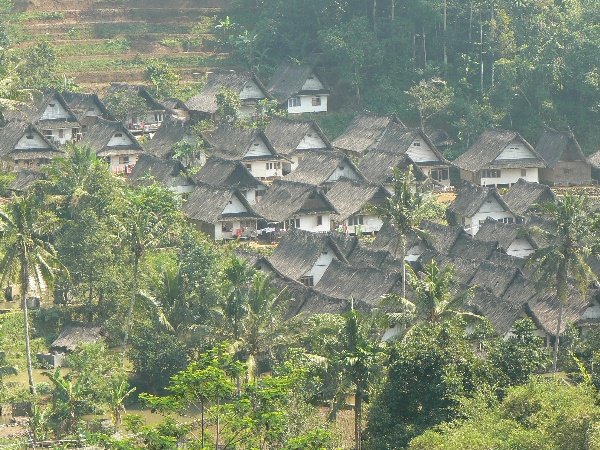
One of the most distinctive features of Kampung Naga is its unique and simple traditional houses. The village comprises 111 houses, all constructed without cement or brick, using bamboo walls, wooden panels, and thatched roofs made from palm fiber. The community uses traditional stoves for cooking, maintaining the authenticity of Sundanese culinary traditions. The absence of modern luxuries emphasizes a lifestyle rooted in simplicity and cultural preservation.
Scenic Village Views
The village’s natural surroundings are breathtaking. Visitors can enjoy lush green rice fields, dense forests, and clear flowing streams, creating a tranquil environment ideal for relaxation and mental rejuvenation. Kampung Naga intentionally avoids the use of electricity and gas, instead relying on sunlight and oil lamps for lighting, which enhances the sense of stepping back in time.
Local Handicrafts
Tourists can also shop for unique souvenirs, including woven lamps, coconut shell teapots, baskets, bags, and traditional paintings. Each item reflects the skill, creativity, and cultural identity of Kampung Naga’s residents. Purchasing these crafts contributes to the preservation of the village’s artisanal heritage.
Traditional Arts and Performances
Kampung Naga is home to traditional arts, such as Terbang Gembrung, Terbang Sajak, angklung, and gambang music. Terbang Gembrung, in particular, is a sacred musical performance played only on specific occasions, such as the night of Eid or other religious ceremonies, and is traditionally reserved for villagers.
Cultural Rituals
Hajat Sasih Ceremony
The Hajat Sasih ritual is an essential cultural practice for the Sa-Naga community. Conducted on significant dates in the Islamic calendar, including Muharram, Maulud, Sha’ban, Syawal, and Rayagung, the ceremony involves activities such as visiting ancestral graves, purifying oneself in the Ciwulan River, and performing ablution. This ceremony is a combination of religious devotion and cultural heritage, offering visitors a rare glimpse into the spiritual life of the village.
Menyepi Ritual
The Menyepi ritual is performed every Tuesday, Wednesday, and Saturday. Residents of all ages participate, refraining from negative conversations to maintain harmony and peace within the community. This practice underscores the village’s commitment to ethical conduct and communal well-being.
Agricultural Practices
Kampung Naga is largely self-sufficient in food production, with rice harvested twice a year and stored in traditional granaries called leuit. These practices highlight sustainable living and independence from external markets, further preserving the traditional lifestyle.
Village Layout and Natural Harmony
Kampung Naga is situated in a valley surrounded by forest and rice terraces, covering approximately 1.5 hectares. Visitors must descend over 400 stone steps to reach the village, offering scenic views of the surrounding greenery and rivers. The village maintains strict environmental rules, prohibiting entry into the forest to preserve its natural integrity.
Every building in Kampung Naga is carefully designed to maintain uniformity and cultural authenticity, with only one door per house and minimal interior furnishings. Modern amenities are intentionally absent, enhancing the cultural experience and connection to traditional life.
Visitor Guidelines and Etiquette
Tourists are expected to respect local customs, including restrictions on music, photography in certain areas, and adherence to sacred practices. Visitors may participate in rituals only if they do not disrupt the events. This respectful engagement allows for an immersive and meaningful experience while preserving the village’s cultural integrity.
Conclusion
Kampung Naga is a living testament to Sundanese cultural heritage, offering a rare opportunity to experience traditional village life in its purest form. From simple bamboo houses and terraced rice fields to sacred rituals and artisanal crafts, the village provides a profound educational and recreational experience.
A visit to Kampung Naga is not just a leisure trip—it is a journey into a community that harmoniously balances culture, spirituality, and nature. Tourists can immerse themselves in the tranquility, traditions, and wisdom of the village, gaining insights that are both enriching and unforgettable. For those seeking a cultural retreat from urban chaos, Kampung Naga is truly an exceptional destination.