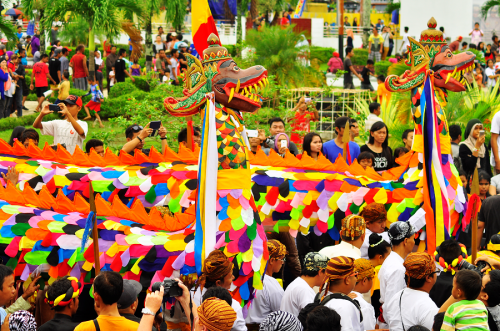
When discussing Kutai Kartanegara, one cannot overlook the renowned annual Erau Festival, one of the oldest cultural celebrations in the Indonesian archipelago. This traditional festival has been preserved for centuries, tracing its origins to the historical Kutai Kartanegara Ing Martadipura Sultanate. The Erau Festival is widely regarded as a vibrant expression of community life, representing both the sultanate’s legacy and the local population’s cultural identity.
The term “Erau” comes from the Malay word “eroh”, which in the Kutai Tenggarong dialect means a lively festivity or public celebration. Historically, the festival was a grand event, spanning 40 days and nights, during which communities across the sultanate’s territory—now part of East Kalimantan—contributed their agricultural produce to the capital. This act symbolized gratitude for the bountiful harvest, while the royal family reciprocated by hosting lavish feasts for their people, reflecting a harmonious relationship between rulers and subjects.
Historical Background of the Erau Festival
Origins and Royal Tradition
According to oral histories passed down through generations, Erau originated in the 12th century CE during the early reign of Aji Batara Agung Dewa Sakti, who later became the first Sultan of Kutai Kartanegara Ing Martadipura. The festival initially served as a thanksgiving ritual, giving thanks for abundant harvests and divine blessings.
Over the centuries, the political landscape shifted. Kutai eventually became part of the Republic of Indonesia, transitioning from a special autonomous region led by the sultan to a regency governed by an appointed bupati. Despite these changes, the Erau Festival endured, evolving from a royal ceremony to a cultural celebration that continues to honor the sultanate’s rich heritage.
Revival of the Festival
The last Erau festival conducted strictly according to traditional sultanate protocols took place in 1965. Following a brief hiatus, local government initiatives and collaboration with the sultanate revived the festival in 1971. The event was adapted to a biennial schedule, making it both a preservation effort for cultural heritage and an attraction for domestic and international tourists.
Initially held in September to coincide with the founding of Tenggarong City, the festival’s schedule was moved to July from 2010 onward, aligning with the peak tourist season. This adjustment increased visitor participation and allowed greater exposure of Kutai’s cultural wealth to travelers.
Highlights of the Erau Festival
Cultural Parades and Traditional Performances
The Erau Festival features a variety of captivating events, drawing visitors into the rich traditions of Kutai Kartanegara.
Cultural Parade
One of the festival’s main attractions is the cultural parade, where participants don traditional attire representing diverse ethnic groups of East Kalimantan. The parade showcases folk dances, ceremonial rituals, and musical performances, offering an immersive glimpse into the region’s multicultural identity.
Traditional Competitions
Visitors can also witness or participate in a range of competitions, including traditional sports, artistic contests, and culinary challenges. These activities preserve the skills and knowledge that have been passed down through generations while promoting community engagement.
Craft and Culinary Exhibitions
Local artisans and culinary experts present their products in various exhibitions, highlighting the craftsmanship and flavors unique to Kutai Kartanegara. These showcases provide opportunities for visitors to purchase authentic handicrafts and local delicacies, supporting the regional economy and cultural entrepreneurship.
Performing Arts
Traditional performances, including folk dances, local music, and theatrical displays, form the backbone of the festival. These performances not only entertain but also educate visitors about the historical and social context of Kutai’s cultural heritage.
Erau as a Platform for Cultural Diplomacy
In 2013, the festival expanded its scope by incorporating international cultural elements, giving rise to the Erau International Folklore and Art Festival (EIFAF). This event invited cultural delegates from around the world, creating a platform for cross-cultural exchange. By juxtaposing local traditions with global artistic expressions, EIFAF introduced Kutai Kartanegara’s unique heritage to an international audience while fostering mutual understanding among diverse communities.
Impact on Culture and Tourism
Cultural Preservation
The Erau Festival plays a pivotal role in safeguarding Kutai’s cultural legacy. By highlighting traditional practices, performances, and rituals, it fosters a sense of pride among local communities and encourages younger generations to engage with their heritage.
Tourism Attraction
The festival attracts thousands of visitors annually, enhancing Tenggarong’s visibility as a cultural tourism destination. Tourists experience the region’s customs firsthand, contributing to the growth of hospitality, transportation, and ancillary services.
Economic Benefits
Beyond cultural preservation, the festival stimulates local economic activity. Vendors, artisans, and food producers benefit from increased sales, while tourism generates revenue for the wider community. This interplay between culture and economy demonstrates how heritage festivals can serve as catalysts for sustainable development.
Practical Tips for Visiting the Erau Festival
- Plan Ahead: Align your travel plans with the festival schedule, especially after its shift to July, to maximize cultural experiences.
- Respect Local Customs: Observing proper etiquette during rituals and ceremonies is essential to maintain cultural sensitivity.
- Engage Actively: Participate in workshops, demonstrations, and interactive performances to gain deeper insights into local traditions.
- Support Local Vendors: Purchasing handicrafts and traditional foods contributes to the preservation of local arts and the village economy.
- Document Responsibly: Photography and filming are encouraged but should not disrupt ceremonial activities.
Conclusion
The Erau Festival is more than a cultural celebration; it is a living testament to the history, artistry, and traditions of Kutai Kartanegara. From elaborate parades and captivating performances to artisan workshops and traditional competitions, the festival offers a comprehensive cultural immersion for visitors. By bridging past and present, Erau not only preserves a centuries-old heritage but also promotes tourism, economic growth, and international cultural exchange. For travelers seeking an enriching cultural experience, the Erau Festival represents an unmissable opportunity to witness the enduring legacy of Indonesia’s oldest sultanates in a vibrant, modern context.