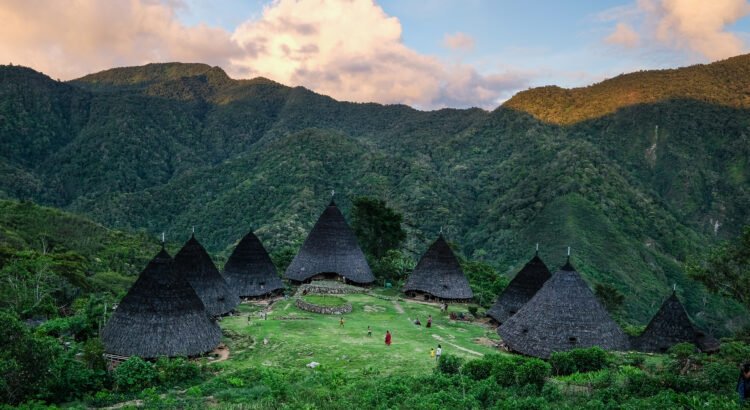

Nestled in the highlands of Satar Mese Bar, Manggarai Regency, Wae Rebo Village is recognized by UNESCO as a World Cultural Heritage site since 2012. Perched at an altitude of approximately 1,200 meters above sea level, this remote village is surrounded by lush valleys, rolling hills, and dense forests. Wae Rebo is a place where traditional values, local wisdom, and indigenous architecture thrive, offering visitors a unique opportunity to immerse themselves in the authentic lifestyle of the Manggarai people.
More than just a scenic destination, Wae Rebo provides travelers with an enriching cultural experience. The village showcases traditional customs, ceremonial rituals, and iconic architectural forms, making it an ideal stop for those seeking both natural beauty and cultural insight.
Experiencing Wae Rebo: A Cultural Journey
1. Trekking Through Nature
Reaching Wae Rebo requires a challenging yet rewarding trek. Visitors typically start from Komodo Airport and travel approximately 150 km by car, taking around five hours to reach Denge Village, the gateway to Wae Rebo. From Denge, a 9 km trek through forested hills and picturesque valleys awaits, usually taking three hours depending on physical fitness and weather conditions.
Along the trekking route, travelers are treated to breathtaking scenery: dense forests, flowing rivers, and expansive vistas of the surrounding mountains. The fresh mountain air, coupled with the peaceful sounds of birds and wildlife, transforms the physically demanding journey into a serene and memorable experience. This trek, often referred to as a “journey into the clouds,” sets the stage for the cultural treasures that lie ahead.
2. Traditional Architecture: Mbaru Niang
The most iconic feature of Wae Rebo is the Mbaru Niang, a traditional conical house that symbolizes the village’s architectural heritage. Each Mbaru Niang stands approximately 15 meters tall, with five levels designated for specific functions, and is topped with a buffalo horn ornament.
Staying overnight in a Mbaru Niang allows visitors to experience daily life in Wae Rebo firsthand. It provides a rare opportunity to live in a dwelling that has been preserved for generations, offering insights into the harmonious relationship between local communities and their environment.
3. Cultural Performances and Rituals
Caci Dance
The Caci Dance is a vibrant display of bravery and masculinity, performed by pairs of men wielding whips (larik) and shields (ta’ang). Traditionally held during Penti ceremonies, the dance reenacts combat scenarios where one dancer attacks and the other defends. This ritual not only entertains but also serves as a means of preserving Manggarai cultural identity.
Rangku Alu Dance
Another traditional performance is the Rangku Alu, a bamboo dance played by two groups of 4–6 participants. One group manipulates bamboo poles rhythmically, while the other leaps between them, following the beat. This energetic dance demonstrates agility, coordination, and communal cooperation.
Penti Ceremony
Penti is a sacred ritual in Wae Rebo, expressing gratitude for the year’s harvest and blessings. Typically held in November, this ceremony features traditional songs, dances, and offerings. Visitors are welcomed to witness this deeply spiritual event, provided they respect local customs and participate with cultural sensitivity.
4. Engaging with Local Traditions
Upon arriving at the village, visitors signal their presence by sounding a bamboo drum, known as Pepak, at the final checkpoint before entering. Guests are then greeted by local residents and guided to a Mbaru Niang for the Wae Lu’u welcoming ceremony. This initiation reflects the villagers’ hospitality and underscores the significance of community rituals in preserving cultural heritage.
Visitors can observe Mbata, a local tradition involving circle formations of men singing songs accompanied by drums, conveying life lessons and expressing gratitude for the earth’s bounty. Participating or witnessing these rituals offers travelers a profound understanding of Manggarai values, spirituality, and community bonds.
5. Craftsmanship and Local Products
Wae Rebo is also renowned for its handicrafts, woven textiles, and coffee plantations. Guests can observe local artisans creating vibrant handwoven fabrics, including songke, congkar, and rebong patterns. The intricate textiles, often dominated by bright hues with black as a base color, reflect the village’s artistic heritage.
Additionally, visitors can experience the entire coffee-making process, from harvesting beans in local gardens to roasting and grinding. These experiences not only showcase traditional techniques but also allow travelers to purchase authentic souvenirs, supporting the local economy.
6. Immersive Village Stay
Spending the night in a Mbaru Niang offers an unparalleled cultural immersion. Guests live alongside villagers, observing and participating in daily routines such as cooking, farming, and crafting. This stay provides insights into the rhythms of rural life and fosters appreciation for sustainable practices and communal living.
The combination of nature, culture, and hands-on experiences makes Wae Rebo an ideal destination for travelers seeking more than passive sightseeing. Each interaction and activity deepens understanding of the region’s heritage while creating lasting memories.
Practical Tips for Visiting Wae Rebo
- Plan Your Trip Carefully: Travel to Wae Rebo is demanding, requiring both a long drive and trekking. Preparing physically and scheduling sufficient time ensures a smooth visit.
- Wear Appropriate Footwear: Trekking paths can be slippery, particularly during the rainy season, so sturdy shoes are essential.
- Respect Local Customs: Follow village protocols, including rituals, ceremonies, and dress codes, to honor local traditions.
- Bring Essentials: Water, snacks, sunscreen, and weather-appropriate clothing enhance comfort during the trek and village stay.
- Engage with Locals: Participate in or observe cultural activities to gain meaningful insight, but always do so respectfully.
Conclusion
Wae Rebo Village is a captivating destination where breathtaking natural landscapes meet vibrant cultural heritage. From trekking through verdant hills and valleys to experiencing sacred rituals, traditional dances, and iconic Mbaru Niang architecture, every moment in Wae Rebo offers a unique blend of adventure and education. Visitors not only witness the beauty of Flores but also gain deep appreciation for the Manggarai people’s traditions, hospitality, and sustainable way of life. A journey to Wae Rebo is more than a visit; it is an immersive cultural experience that leaves lasting memories of Indonesia’s rich heritage.