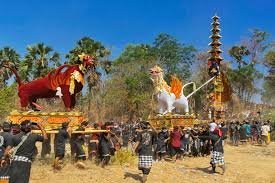
Travel is more than visiting new places; it is about immersing oneself in the rituals, traditions, and lifestyles of different cultures. Among the myriad cultural experiences that travelers can encounter, Bali, Indonesia, offers a distinctive and unforgettable one: the Ngaben ceremony. This Hindu cremation ritual is more than just a funeral; it is a profound celebration of life, death, and spiritual transition. Experiencing Ngaben allows travelers to witness Bali’s spiritual richness firsthand while gaining a deeper understanding of how local communities honor life and the departed.
Understanding Ngaben
What is Ngaben?
Ngaben, often referred to as the “Balian cremation ceremony,” is a traditional Hindu ritual in Bali intended to liberate the soul of the deceased from the earthly realm. According to Balinese Hindu beliefs, after death, the soul temporarily resides in a liminal state before moving on to the next life. Ngaben facilitates this journey, ensuring the soul’s peaceful transition. Unlike somber Western funerals, Ngaben is marked by vibrancy, music, and community involvement, reflecting a philosophy that views death as a continuation rather than an end.
The Spiritual Significance
At its core, Ngaben embodies the Balinese concept of samsara, the cycle of birth, death, and rebirth. Families believe that properly conducting the ceremony ensures that the deceased attains a favorable reincarnation. The ritual involves offerings, prayers, and processions, all meticulously performed to maintain harmony between the physical and spiritual worlds. Observing Ngaben allows visitors to witness an intricate blend of devotion, artistry, and communal unity that forms the backbone of Balinese spiritual life.
The Ngaben Experience
Preparation and Rituals
Ngaben is not a spontaneous event; it is planned with care and precision. Preparations can take weeks or even months, involving elaborate construction of cremation towers, called bade, and intricately decorated coffins, often shaped like bulls or other symbolic animals. Families invite priests to perform ceremonies and blessings, ensuring all spiritual requirements are fulfilled. Visitors observing these preparations gain insight into the meticulous attention Balinese people pay to honoring their ancestors and preserving sacred traditions.
Community Involvement
One of the most striking aspects of Ngaben is the active participation of the community. Neighbors, friends, and extended family members contribute to the ceremony by carrying the cremation tower in a lively procession, playing traditional gamelan music, and assisting in various ritual tasks. This communal involvement reflects the strong social bonds within Balinese society and highlights the collective responsibility in preserving cultural heritage. For travelers, witnessing this cooperative effort is an eye-opening experience, showcasing how culture thrives through shared practices and mutual respect.
The Cremation Procession
The cremation procession itself is both dramatic and symbolic. Participants carry the elaborately decorated tower through village streets, accompanied by dancing, music, and offerings. The procession culminates at the cremation site, where the body is cremated amid prayers and rituals intended to free the soul. This vivid spectacle, blending solemnity and celebration, offers travelers a unique perspective on the Balinese approach to mortality—one that embraces life and death as interconnected stages of existence.
Lessons from the Ngaben Ceremony
Understanding Mortality and Celebration
Observing Ngaben encourages reflection on life, death, and cultural interpretations of mortality. Unlike many cultures that mourn death with quiet grief, the Balinese celebrate the life of the departed while facilitating their spiritual journey. This approach fosters a mindset that sees death not as an end, but as a transition to a new chapter. Travelers who experience Ngaben often leave with a renewed appreciation for life, a deeper respect for spiritual traditions, and a broadened worldview.
Cultural Sensitivity and Respect
Participating in or observing Ngaben requires sensitivity and respect. Photography may be restricted, and visitors are expected to dress modestly and behave reverently. Engaging with the ceremony with mindfulness allows travelers to gain authentic cultural insights without disrupting the ritual. This encounter teaches the importance of approaching unfamiliar traditions with humility, respect, and curiosity—an essential lesson for any global traveler.
Conclusion
The Ngaben ceremony in Bali is more than a local ritual; it is a window into a worldview that honors life, death, and community. Experiencing this unique cultural encounter offers travelers a profound insight into Balinese spirituality, social cohesion, and artistic expression. Beyond the visual spectacle, Ngaben imparts lessons about mortality, celebration, and the importance of cultural respect. For those seeking immersive travel experiences, witnessing or participating in Ngaben is an extraordinary opportunity to engage deeply with a culture that perceives life and death not as opposites, but as essential parts of a continuous journey.