Visiting the United States offers travelers countless memorable adventures, yet few destinations are as iconic and historically significant as Yellowstone National Park. Spanning mostly across Wyoming, with smaller sections in Montana and Idaho, Yellowstone has stood as a symbol of conservation and natural wonder since its establishment in 1872 by President Ulysses S. Grant. Not only is it the first national park in the U.S. and the world, but it is also a place where geothermal marvels, abundant wildlife, and pristine ecosystems come together to create an unparalleled experience.
From the famous Old Faithful Geyser to sweeping valleys teeming with bison and elk, Yellowstone represents both the raw power of nature and humanity’s effort to protect it. Beyond its beauty, the park holds deep historical significance, ecological value, and endless opportunities for adventure.
The History of Yellowstone National Park
Indigenous Presence and Early Heritage
Long before Yellowstone became a protected park, it was home to Native American tribes for at least 11,000 years. These communities used the land for hunting, fishing, gathering plants, and holding spiritual ceremonies. Many geothermal features fascinated them, inspiring descriptive names such as Firehole River, Roaring Mountain, and Dragon’s Mouth Spring. Their connection to the land set the foundation for the cultural legacy that still resonates within the park today.
Early European-American Exploration
During the early 19th century, fur trappers and mountain men began exploring the Yellowstone area. They returned with astonishing stories of geysers, waterfalls, and colorful hot springs, though many doubted their accuracy. It wasn’t until 1869 that the first well-documented civilian expedition took place, led by three explorers who published detailed reports, sparking scientific and public interest.
Official Recognition as a National Park
In 1871, geologist Ferdinand V. Hayden conducted a government-backed survey of Yellowstone, accompanied by photographer William Henry Jackson and painter Thomas Moran. Their photographs and paintings captured the imagination of Congress and the American public, proving Yellowstone’s landscapes were worth protecting. As a result, Congress designated the area as the world’s first national park on March 1, 1872.
Challenges and Protection
In its early years, Yellowstone faced difficulties such as poaching, illegal logging, and unregulated development due to a lack of staff and funding. In 1886, the U.S. Army took control for three decades, building infrastructure, enforcing rules, and laying the groundwork for modern park management.
By 1916, the National Park Service (NPS) was established, and Yellowstone’s administration shifted under its jurisdiction the following year. With a focus on conservation, research, and education, NPS expanded Yellowstone’s role as both a tourist destination and a site of global ecological importance. In 1978, UNESCO recognized Yellowstone as a World Heritage Site, further affirming its universal cultural and natural value.
Attractions and Activities in Yellowstone
Exploring Geothermal Features
Yellowstone contains over half of the world’s geysers, along with countless hot springs, mud pots, and fumaroles. Among its geothermal highlights:
- Old Faithful Geyser: Famous for its predictable eruptions every 60–110 minutes.
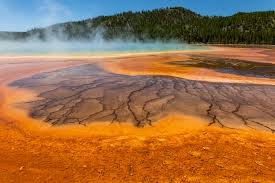
- Grand Prismatic Spring: A massive, rainbow-colored hot spring with a diameter of 370 feet.
- Steamboat Geyser: The tallest active geyser in the world, with eruptions that can shoot water over 300 feet high.
- Dragon’s Mouth Spring: A steaming, roaring hot spring that appears like the mouth of a dragon.
Visitors can follow designated boardwalks and trails to safely view these natural wonders up close.
Wildlife Watching
Yellowstone is home to an extraordinary variety of animals, making it one of North America’s premier wildlife destinations. Here, you can spot:
- Large mammals like bison, elk, grizzly bears, and wolves.
- Birds of prey such as bald eagles and osprey.
- Aquatic life including trout and whitefish in Yellowstone’s rivers and lakes.
The park is one of the few places where herds of bison still roam freely, providing visitors with a glimpse into America’s untamed past. Following safety guidelines—such as keeping at least 100 meters away from bears and wolves, and 25 meters from other animals—is essential for a safe visit.
Natural Landscapes and Landmarks
Yellowstone’s dramatic terrain offers countless sights:
- Grand Canyon of the Yellowstone: A striking gorge stretching 20 miles long and nearly 1,200 feet deep, featuring the iconic Lower and Upper Falls.
- Yellowstone Lake: The largest high-altitude lake in North America, covering 136 square miles.
- Mount Washburn: A popular hiking destination that rewards visitors with sweeping views of the park’s wilderness.
- Yellowstone River: Flowing over 600 miles, it carves through canyons and sustains the park’s ecosystems.
Outdoor Recreation
Yellowstone isn’t just about sightseeing—it’s also an outdoor playground:
- Hiking: With more than 1,600 kilometers of trails, ranging from easy walks to challenging backcountry treks.
- Camping: Available at 12 developed campgrounds or in the wilderness with special permits.
- Boating and Fishing: Allowed in certain lakes and rivers, with appropriate permits.
- Cycling: Some roads and designated trails welcome bicycles for adventurous riders.
Accessing Yellowstone National Park
Main Entrances
Yellowstone has five primary entrances:
- North Entrance (Gardiner, Montana)
- Northeast Entrance (Cooke City, Montana)
- West Entrance (West Yellowstone, Montana)
- South Entrance (near Moran, Wyoming)
- East Entrance (near Cody, Wyoming)
Transportation Options
- By Air: The nearest airports are Bozeman Yellowstone International (Montana) and Yellowstone Regional Airport (Wyoming). Both offer car rentals and shuttle services to the park.
- By Public Transport: Buses and trains run to towns near the entrances, where visitors can connect to shuttles or rideshares.
- By Car: Driving remains the most flexible option, with highways linking Yellowstone to surrounding states. Rental cars, rideshares, or taxis are also available for access.
Visitor Tips for Yellowstone
Plan Ahead and Book Online
Purchasing entry passes online saves time and may offer discounts. It also helps visitors avoid long ticket lines at the park entrances.
Choose the Right Season
Yellowstone experiences four distinct seasons:
- Winter (Dec–Mar): Cold, snowy, and quiet, averaging -9°C.
- Spring (Apr–May): Mild temperatures, blooming flowers, and fewer crowds.
- Summer (Jun–Aug): Peak tourist season, warmer weather, but heavy crowds.
- Fall (Sep–Nov): Crisp air, colorful foliage, and a calmer atmosphere.
Spring and autumn are generally the most comfortable times to visit.
Pack Accordingly
Visitors should bring layered clothing, sturdy footwear, hats, sunscreen, personal medications, maps, binoculars, and plenty of water. Camping gear and safety supplies are crucial for overnight stays or extended hikes.
Respect Nature and Stay Safe
Follow all park regulations:
- Stay on designated trails and boardwalks.
- Do not feed or approach wildlife.
- Dispose of waste properly.
- Keep noise levels low to preserve the natural ambiance.
Conclusion
Yellowstone National Park is not only the world’s first national park but also one of its greatest natural treasures. Its unique combination of geothermal features, abundant wildlife, breathtaking landscapes, and cultural heritage make it a destination unlike any other.
From the explosive eruptions of Old Faithful to the quiet beauty of Yellowstone Lake, every corner of the park offers something extraordinary. With well-planned preparation, respect for nature, and an adventurous spirit, visitors can enjoy a safe and enriching journey through this remarkable wilderness.
Yellowstone continues to remind us of the importance of conservation, inspiring millions each year to cherish and protect the Earth’s most precious ecosystems.