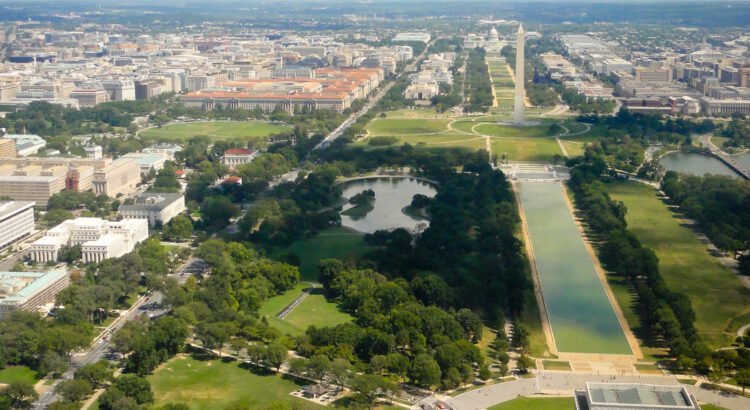
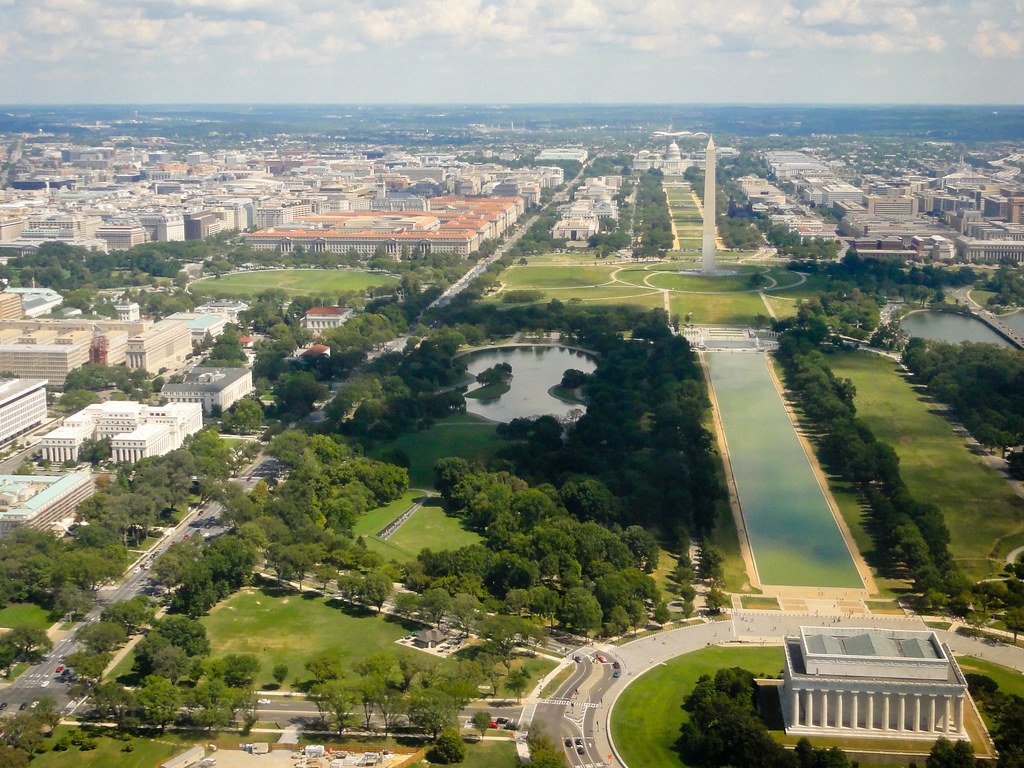
The National Mall in Washington, D.C. is more than just a park—it is the symbolic heart of the United States. Stretching for over 3 kilometers from the Lincoln Memorial on the west end to the Capitol Building on the east, this green expanse is surrounded by historic monuments, memorials, cultural institutions, and some of the most prestigious museums in the world. Managed by the National Park Service (NPS), the National Mall attracts approximately 24 million visitors annually, making it one of the most visited national parks in the United States.
Here, America’s past, present, and future converge. Visitors can admire its monumental architecture, reflect on the country’s democratic journey, and participate in cultural, social, or even political events. Whether you are passionate about history, art, or simply enjoy open green spaces, the National Mall offers something memorable for everyone.
The History of the National Mall
Origins and Early Development
The story of the National Mall began with the construction of the Capitol Building in 1793. This iconic structure, designed by William Thornton, was chosen after a competition sponsored by President George Washington and Secretary of State Thomas Jefferson. Located on Jenkins Hill, which Washington referred to as a “pedestal waiting for a monument,” the Capitol set the foundation for the symbolic layout of the Mall.
Over time, the Mall evolved into a ceremonial space filled with monuments, memorials, and government buildings that reflect America’s heritage.
Iconic Monuments and Memorials
The National Mall is now home to many of the nation’s most treasured landmarks, including:
- Washington Monument – A towering obelisk dedicated to the nation’s first president.
- Lincoln Memorial – Honoring Abraham Lincoln, symbol of unity and equality.
- Jefferson Memorial – Celebrating the author of the Declaration of Independence.
- World War II Memorial – Dedicated to Americans who served during WWII.
- Vietnam Veterans Memorial and Korean War Veterans Memorial – Solemn tributes to fallen soldiers.
- Martin Luther King Jr. Memorial – Recognizing the civil rights leader’s vision.
Beyond these, visitors can also find Arlington National Cemetery, the Tomb of the Unknown Soldier, and memorials dedicated to different branches of the U.S. military.
The Smithsonian Institution
In 1846, the Smithsonian Institution was established, significantly shaping the Mall’s cultural landscape. This research and educational complex operates numerous museums along the Mall, such as:
- National Museum of American History
- National Museum of Natural History
- National Air and Space Museum
- National Museum of African American History and Culture
- National Museum of the American Indian
- National Portrait Gallery
- National Gallery of Art
These institutions preserve America’s scientific, cultural, and artistic treasures, offering free access to the public.
National Events and Movements
The National Mall has long been the stage for historic gatherings, speeches, and demonstrations. Some notable events include:
- Dr. Martin Luther King Jr.’s “I Have a Dream” speech in 1963.
- Anti-Vietnam War protests in 1969.
- The Live Aid concert in 1985.
- The Smithsonian Folklife Festival (1967–2010).
- Presidential inaugurations every four years.
- The March for Our Lives in 2018.
- Annual Independence Day celebrations.
These events reinforce the Mall’s role as a space for democracy, unity, and cultural exchange.
Things to Do at the National Mall
Visiting Monuments and Memorials
A trip to the National Mall is incomplete without exploring its monuments. Visitors can admire the symbolic architecture, read inspiring inscriptions, and take photographs of these historic landmarks. Popular sites include the Washington Monument, Lincoln Memorial, and Martin Luther King Jr. Memorial.
Exploring Museums and Galleries
Art and history lovers will find endless opportunities inside the Smithsonian museums. From world-class artifacts at the National Museum of Natural History to space exploration exhibits at the Air and Space Museum, every visitor can find something fascinating. Regular programs such as concerts, lectures, and interactive exhibits make the experience even more enriching.
Participating in National Events
Depending on the timing of your visit, you may witness presidential inaugurations, marches, or cultural festivals. These events offer a chance to experience the Mall’s energy in a communal setting.
Dining and Entertainment
The Mall area also offers diverse dining options. From classic American dishes to international cuisine, visitors can try places such as:
- Mitsitam Café (Native American cuisine)
- Pavilion Café at the National Gallery of Art
- Sweet Home Café (African American culinary traditions)
- Shake Shack at Union Station
For evening entertainment, theaters like Ford’s Theatre and the John F. Kennedy Center for the Performing Arts are nearby.
How to Get to the National Mall
Public Transportation
- Metrorail: Take the Blue, Orange, Silver, Red, Green, or Yellow lines to nearby stations such as Smithsonian, L’Enfant Plaza, or Federal Triangle.
- Metrobus: Multiple bus routes stop around the Mall.
- Capital Bikeshare: Visitors can rent bikes from stations across the city.
Driving and Parking
For those driving, parking garages are available near Union Station, the National Gallery of Art, and L’Enfant Plaza. However, public transport is usually more convenient due to limited parking.
Visitor Tips for the National Mall
1. Plan Ahead
Some museums and attractions require reservations or have limited hours. Checking official websites in advance can save time.
2. Use Public Transit
Metro and bus systems are affordable and efficient ways to navigate the area.
3. Take Advantage of Free Activities
Many museums, monuments, and even guided tours are free of charge.
4. Try Local and Unique Foods
Don’t miss local specialties such as half-smokes or crab cakes at nearby eateries.
5. Discover Hidden Gems
Look beyond the main attractions and explore lesser-known sites like the U.S. Botanic Garden Conservatory, the Congressional Cemetery, or art hubs like The Fridge DC.
Conclusion
The National Mall in Washington, D.C. is more than a tourist attraction—it is the embodiment of America’s history, culture, and democratic values. From iconic monuments and world-class museums to inspiring events and vibrant cultural life, the Mall offers countless opportunities to learn, reflect, and enjoy. Whether you’re visiting for a few hours or spending an entire day, the National Mall provides an experience that is both educational and deeply moving.
By planning your trip carefully and following practical tips, you can make the most of your visit and fully appreciate one of the most meaningful spaces in the United States.