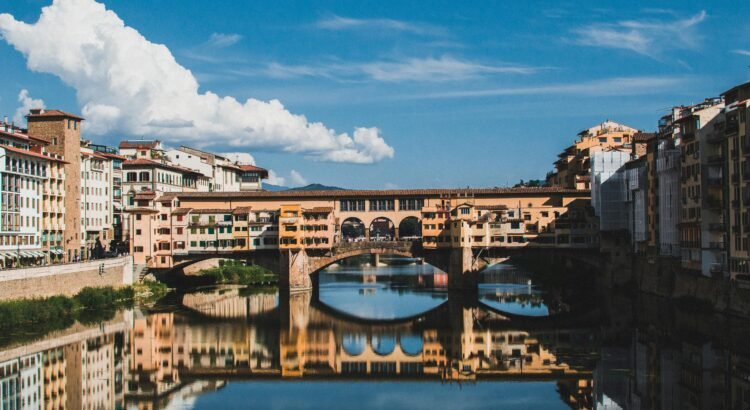
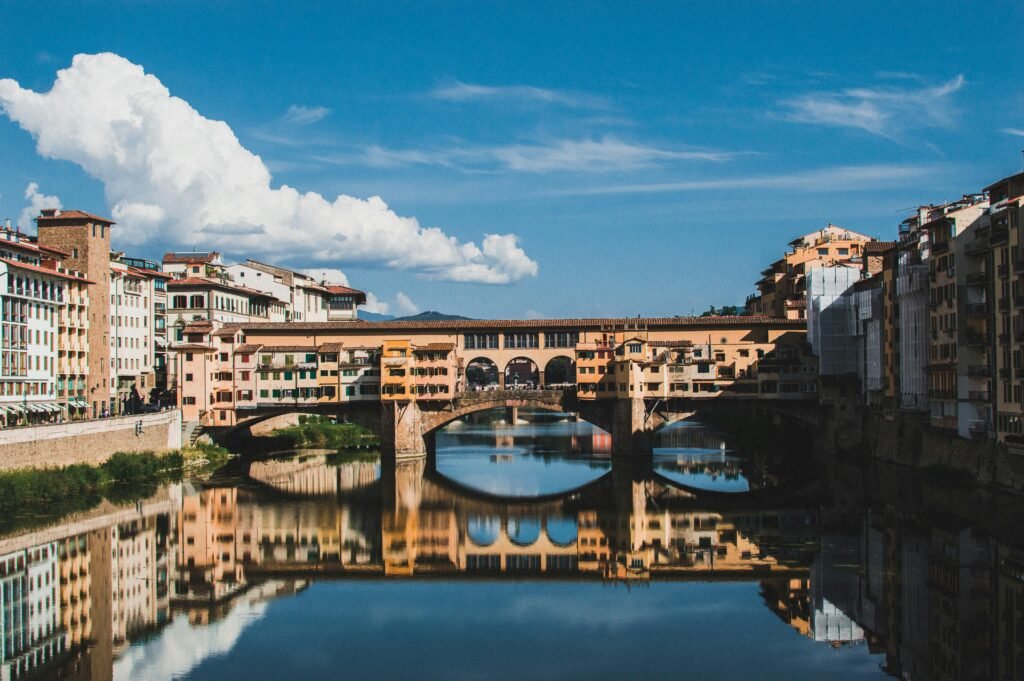
Florence, Italy, is a city renowned for its Renaissance art, stunning architecture, and charming streets. Among its many treasures, the Ponte Vecchio stands out as an enduring symbol of history, commerce, and culture. This iconic bridge, spanning the Arno River, has captured the imagination of visitors for centuries. From its early beginnings to its transformation into a hub for goldsmiths, the Ponte Vecchio offers a unique blend of historical significance and artistic allure. In this guide, we explore the origins, evolution, and attractions of Florence’s beloved bridge.
The Origins and Builders of Ponte Vecchio
The history of Ponte Vecchio can be traced back to at least 966, with documented records of its initial construction and its reconstruction following a devastating flood in 1345. Despite these records, the precise details of the current bridge’s construction remain somewhat mysterious. Giorgio Vasari, a celebrated 16th-century artist and chronicler, attributed the bridge to the architect Taddeo Gaddi. However, architectural analysis suggests that Dominican friars may have played a key role in its design, given their expertise in proportion, harmony, and mathematical precision.
While the exact identity of the builder remains uncertain, it is clear that the bridge was initially constructed as part of Florence’s defensive infrastructure. Over time, windows, decorative elements, and aesthetic details were added, particularly after the shops were sold to merchants, creating the picturesque scene admired today.
The Medici Influence and the Vasari Corridor
One of the most fascinating chapters in the Ponte Vecchio’s history is its connection to the powerful Medici family. When the Medici relocated their residence from Palazzo Vecchio to Palazzo Pitti on the opposite side of the Arno River, they sought a secure and private passage that would allow them to travel without encountering the citizens of Florence.
The solution was the creation of the Corridoio Vasariano, an elevated passageway designed by Giorgio Vasari in 1565. This corridor runs above the Ponte Vecchio’s goldsmith shops, linking the Uffizi Gallery to the Palazzo Pitti. The Vasari Corridor reflects both the Medici’s desire for privacy and their appreciation for architectural elegance, offering a seamless route that showcases Florence from a unique vantage point.
Evolution of the Shops on the Bridge
Shops have existed on the Ponte Vecchio since the 13th century. Originally, the bridge hosted a diverse range of merchants, including butchers, fishmongers, and tanners. These early businesses, particularly the tanners, often created unpleasant odors due to industrial waste, affecting both merchants and pedestrians alike.
In 1593, a significant decree by Ferdinand I reshaped the bridge’s commercial landscape. To improve hygiene and elevate the bridge’s status, Ferdinand mandated that only goldsmiths and jewelers could maintain shops on the Ponte Vecchio. This decision not only enhanced the environment but also established the bridge’s enduring reputation as Florence’s center for exquisite jewelry and craftsmanship.
Benvenuto Cellini and Artistic Legacy
The 16th-century goldsmith Benvenuto Cellini is commemorated with a bust on the Ponte Vecchio, honoring his contributions to art and Florentine culture. Visitors strolling the bridge can observe the finely crafted jewelry shops, many of which maintain traditional wooden shutters. At night, these shutters create a distinctive visual reminiscent of suitcases and chests, adding a romantic and nostalgic atmosphere to evening passeggiate, or leisurely strolls along the Arno.
Experiencing the Ponte Vecchio
Romantic Views and Strolling
Ponte Vecchio is widely regarded as one of the most romantic locations in Florence. Its central position offers breathtaking views of the Arno River, while the bridge itself provides a scenic and historic backdrop. Evening strolls along the bridge, combined with the warm glow from shop windows, create a uniquely magical experience.
Riverfront Perspectives
The bridge can also be appreciated from below, offering a different perspective during theatrical performances, concerts, and boat rides on the Arno. Observing the Ponte Vecchio from the water highlights its architectural ingenuity, including the arches, shops, and decorative elements that have endured for centuries.
Plans for a Riverside Park
Following the flood disaster in 2016, discussions emerged about transforming the temporary work roads built during riverbank reconstruction into a public park. This initiative aims to provide a pleasant walking area along the Arno, allowing visitors to enjoy close-up views of the bridge while exploring the scenic riverbanks. Such a project would further enhance Ponte Vecchio’s appeal as both a historic monument and a recreational destination.
Ponte Vecchio Today
Today, the Ponte Vecchio is more than just a bridge; it is a symbol of Florence’s artistic, commercial, and cultural heritage. Its unique combination of historical architecture, luxury jewelry shops, and riverfront beauty attracts tourists and locals alike. Whether walking across the bridge, admiring its goldsmiths’ creations, or taking in the views from below, visitors are continually reminded of Florence’s rich history and enduring charm.
The bridge’s romantic allure, coupled with its vibrant commercial activity, ensures that it remains a centerpiece of Florentine life. Whether on a leisurely evening stroll or a daytime sightseeing tour, the Ponte Vecchio offers countless opportunities to connect with the city’s heritage and artistic soul.
Conclusion
The Ponte Vecchio is a testament to Florence’s ability to blend history, art, and everyday life into a single, captivating location. From its uncertain origins and medieval defenses to the luxurious goldsmith shops and Vasari Corridor, the bridge reflects centuries of evolution and cultural significance. Its unique combination of architecture, history, and romantic ambiance makes it an essential stop for anyone visiting Florence.
Whether you are an art lover, a history enthusiast, or simply a traveler seeking breathtaking views, the Ponte Vecchio provides an unforgettable experience. By exploring the bridge both on foot and from the river, visitors can appreciate its full beauty and significance. Ultimately, the Ponte Vecchio remains a living symbol of Florence’s past and present—a bridge that connects not only two sides of the Arno but also the city’s rich history with its vibrant contemporary life.